As a cockatiel owner for 5 years—and someone who once fell for half these myths—I’ve seen how wrong ideas about these gentle birds can harm their health. New owners often pick up bad advice from forums or well-meaning friends, leading to malnourished, stressed, or unhappy cockatiels. Let’s break down 7 of the most common misconceptions, back them up with simple science, and fix them with easy solutions.
1. Myth: “Cockatiels only need seed to eat—they love it!”
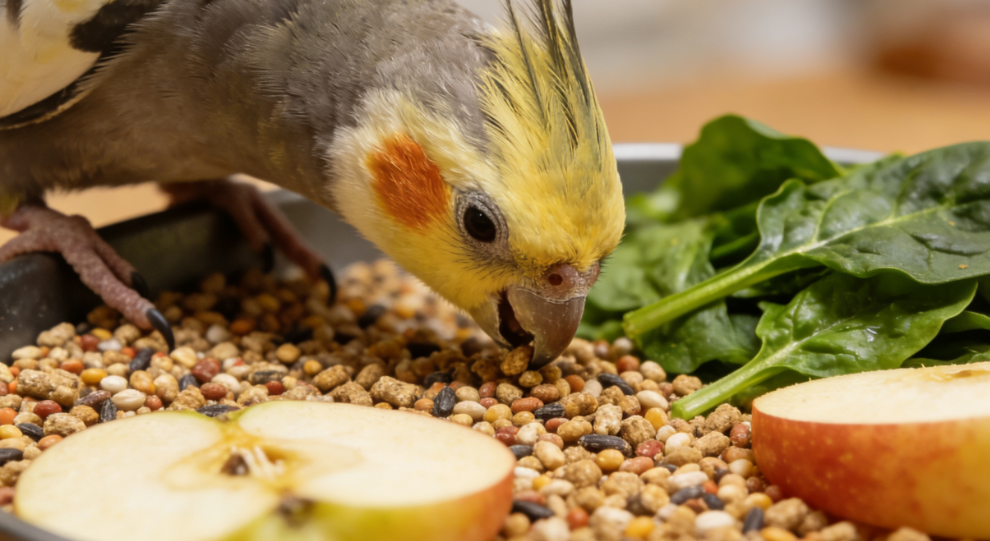
This is the biggest myth I see, and it’s one I used to believe. Yes, cockatiels go crazy for seed, but a seed-only diet is like feeding them candy for every meal. Seeds are high in fat and lack key nutrients (like vitamin A and calcium), which leads to feather plucking, weak bones, or even early death.
The Truth: Cockatiels need a balanced diet centered on high-quality pellets (they make up 60-70% of their food). Add fresh veggies (spinach, carrots), a little fruit (apple, pear), and occasional seed as a treat—not a staple. I switched my cockatiel, Pixel, to pellets slowly (mixing them with seed at first) and he now eats them happily.
2. Myth: “They’re quiet birds—they don’t need much interaction.”
Cockatiels aren’t as loud as macaws, but “quiet” doesn’t mean “lonely.” In the wild, they live in flocks—so keeping one alone without interaction is cruel. A bored cockatiel will stop singing, pluck its feathers, or even refuse food.
The Truth: Aim for 15-20 minutes of one-on-one time daily. Pixel loves sitting on my shoulder while I read, or playing with a soft toy together. Even talking to them while you cook counts—they just need to feel like part of the family. If you work long hours, a mirror (for short periods) or a low-volume radio can help keep them company.
3. Myth: “A small cage is fine—they don’t fly much.”
I once saw a cockatiel in a cage so small it couldn’t spread its wings. That’s not a home—that’s a prison. Cockatiels love to climb, hop, and glide short distances—they need space to move to stay healthy.
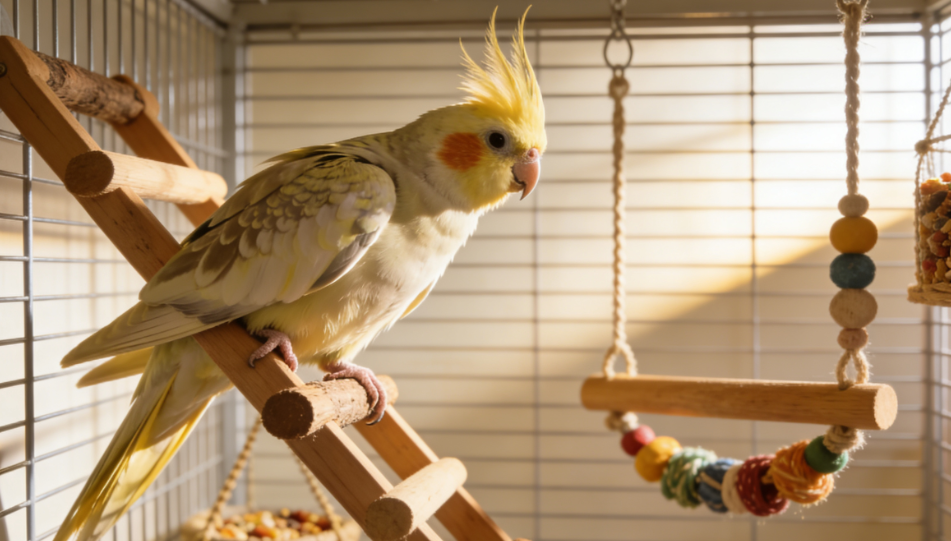
The Truth: Get a cage that’s at least 30x24x24 inches (width x depth x height). Add perches at different heights (wooden ones are best for their feet) and a swing or ladder for play. Pixel’s cage has a little “climbing wall” made of rope, and he spends hours hopping up and down it.
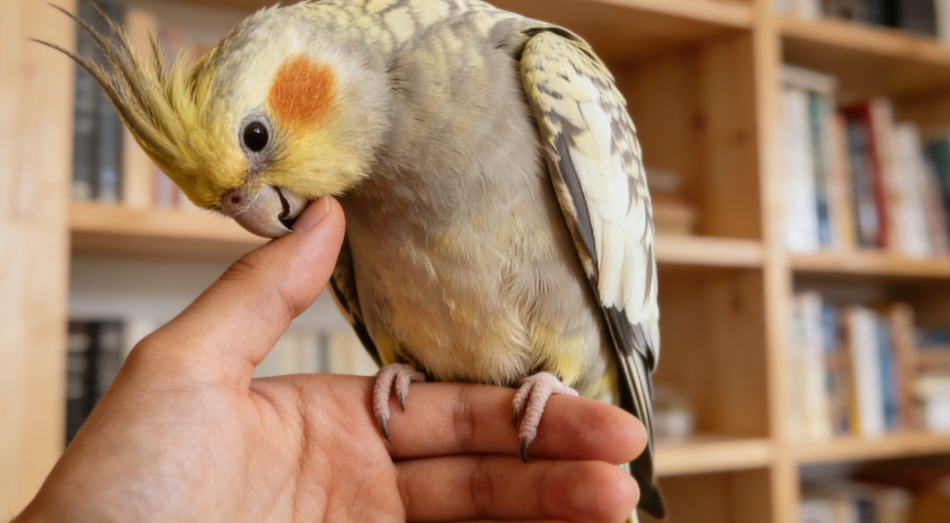
4. Myth: “You can tell a cockatiel’s gender by its color—easy!”
Many people think male cockatiels are yellow with orange cheeks, and females are gray. But that’s only true for adult “normal” colored cockatiels. Young cockatiels (under 6 months) all look gray, and rare color mutations (like white-faced or lutino) break this rule entirely.
The Truth: For most cockatiels, the only sure way to tell gender is by their behavior (males sing more, bob their heads) or a DNA test (cheap and easy to do at home). I thought Pixel was a female until he started whistling “La Cucaracha”—turns out, he’s a boy!
5. Myth: “Cockatiels can learn to talk—just like parrots!”
Don’t get me wrong—cockatiels are smart. But they’re not natural talkers. Unlike budgies or African greys, most cockatiels never learn more than a few words, and many never talk at all.
The Truth: Cockatiels excel at whistling, not talking. Pixel can whistle 3 full tunes (including “Happy Birthday”) and responds to his name—but he’s never said a single word. If you want a talking bird, a budgie or parakeet is a better bet. For cockatiels, embrace their whistling—it’s way more charming anyway.
6. Myth: “They hate water—don’t bother giving them baths.”
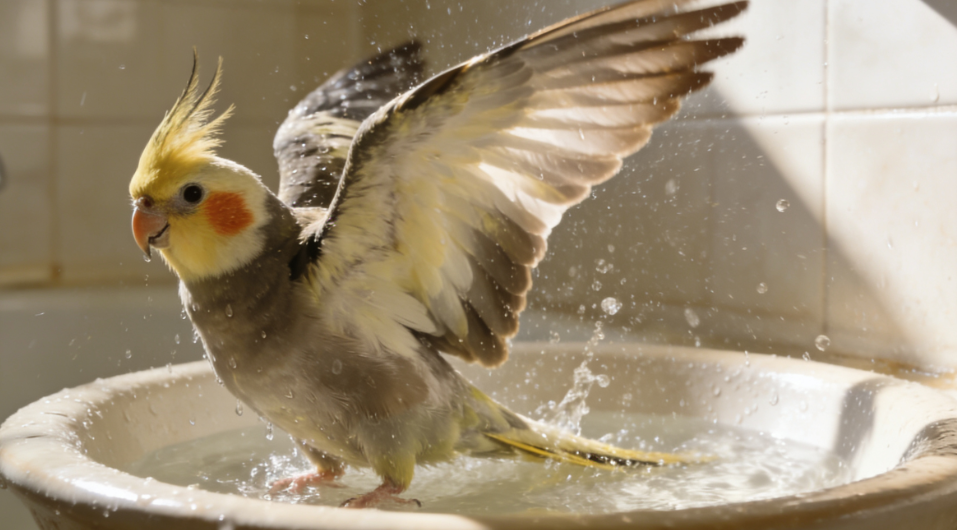
I used to avoid bathing Pixel because he’d fly away when I brought out a bowl. But cockatiels need baths to keep their feathers clean and healthy—dry feathers lead to itching and plucking.
The Truth: Most cockatiels love shallow water—they just don’t like being sprayed. Fill a small dish with 1-2 inches of lukewarm water and set it in their cage. Pixel now jumps in on his own every Sunday morning, splashing around like it’s a party. If yours is shy, add a few leaves to the water—they’ll curiosity will get the best of them.
7. Myth: “If they look fine, they’re healthy—no vet needed.”
Cockatiels are prey animals, so they hide illness well. By the time you see obvious signs (like fluffed feathers or not eating), they’re often very sick.
The Truth: Take your cockatiel to an avian vet for a checkup once a year. Even if they seem healthy, vets can spot early issues (like low calcium) that you might miss. Pixel’s last checkup revealed he needed more veggies in his diet—small fix, big difference for his health.
Final Thought: Cockatiels Deserve Better Than Myths
These birds are gentle, loving, and full of personality—but they rely on us to care for them right. The next time you hear a “tip” about cockatiels, ask: Is this based on science, or just a myth? By ditching these wrong ideas, you’ll give your cockatiel a long, happy life—just like Pixel, who’s now 5 and still whistling up a storm every morning.
💬 Have you ever fallen for a cockatiel myth? How did you fix it? Share your story in the comments—I’d love to hear how you learned to care for your feathered friend!