
The holiday season is all about joy, laughter, and celebration—but for our furry friends, the loud bangs of fireworks, clattering of party plates, and boisterous chatter can feel like a never-ending nightmare. Last New Year’s Eve, my golden retriever, Leo, spent three hours cowering under the bed, trembling so hard his whole body shook. My cat, Mochi, hid in the back of the closet, refusing to eat or come out even for her favorite tuna treat. If your pet reacts similarly to holiday noise, you’re not alone—and there are concrete, vet-backed ways to help them feel safe.
Pets have far more sensitive hearing than humans: a dog’s hearing is 4x more acute, and a cat’s can detect frequencies we can’t even perceive. For them, fireworks aren’t just loud—they’re unpredictable, which triggers their natural fight-or-flight response. The good news? With a little preparation and the right strategies, you can turn a stressful night into a calm one for your beloved companion. Let’s dive into the most effective ways to soothe your pet during holiday noise.
First: Recognize the Signs of Pet Stress from Noise
Stress manifests differently in dogs and cats—knowing what to look for helps you intervene early. Don’t ignore subtle cues; even mild stress can escalate if left unaddressed.
Signs in Dogs
- Trembling, pacing, or panting excessively (even when cool)
- Hiding under furniture, beds, or in small spaces
- Clinging to owners (following you everywhere)
- Destructive behavior (chewing, digging) or accidents indoors (even if house-trained)
- Whimpering, barking, or trying to escape (e.g., scratching at doors/windows)
Signs in Cats
- Hiding in enclosed spaces (closets, cabinets, under beds)
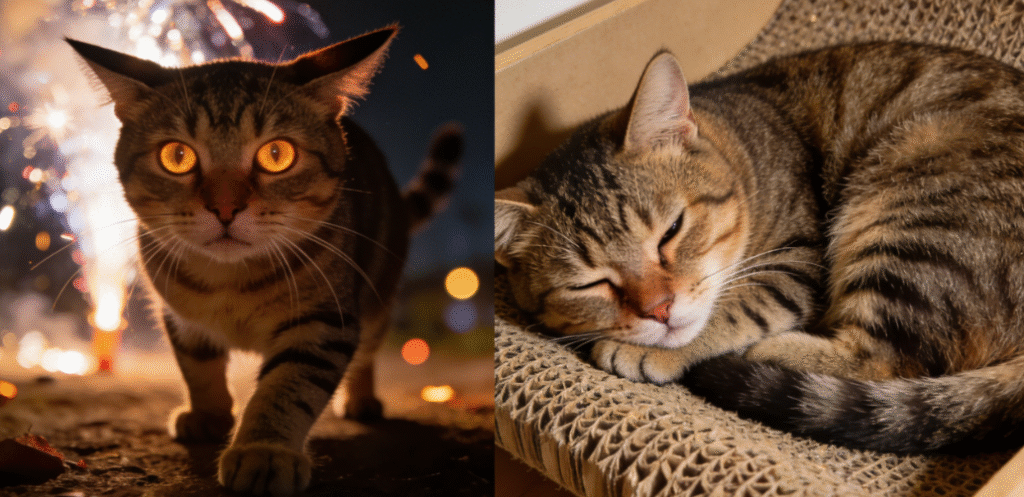
- Dilated pupils, flattened ears, or a puffed-up tail
- Refusing food, water, or grooming
- Aggression (hissing, swatting) or excessive grooming (over-licking paws)
- Freezing in place or trying to flee the home
5 Vet-Backed Strategies to Calm Pets During Holiday Noise
The best approach combines preparation (starting before the noise begins) and real-time comfort (supporting them during the event). These methods are safe for most dogs and cats—always consult your vet if your pet has severe anxiety or health issues.
1. Prep in Advance: Desensitization Training (Start 2–4 Weeks Early)
Desensitization helps your pet get used to loud noises gradually, so they no longer see them as a threat. This is the most long-term solution, but it requires consistency.
- Find a sound clip of fireworks or party noise (use YouTube or apps like “Pet Desensitization Sounds”). Start with the volume very low—so low your pet doesn’t react.
- Play the sound while giving your pet their favorite treat (e.g., freeze-dried chicken, catnip) or engaging them in a fun game (tug-of-war for dogs, feather wand for cats).
- Gradually increase the volume over 2–4 weeks, only raising it if your pet stays calm. If they show stress signs (trembling, hiding), lower the volume back and repeat the previous step.
Pro Tip: Do desensitization sessions for 5–10 minutes a day, not all at once. Short, positive sessions are more effective than long, stressful ones.
2. Create a “Safe Haven” for Your Pet
Pets feel secure in small, dark, quiet spaces. Set up a dedicated safe zone before the noise starts—this gives them a place to retreat to when they’re scared.
How to set it up:
- Choose a quiet room (preferably without windows, like a basement or bathroom) away from party areas or outdoor noise.
- Add cozy bedding (their favorite blanket or bed) and a few familiar toys. For cats, a covered cat bed or cardboard box with a small opening works wonders—they love enclosed spaces.
- Place a piece of your clothing in the area (your scent calms them down). For dogs, you can also add a worn t-shirt or sweater.
- Keep the room dim—avoid bright lights, which can amplify stress. Close the door and use a baby gate if needed to keep the space quiet.
3. Use Background Noise to Mask Loud Sounds
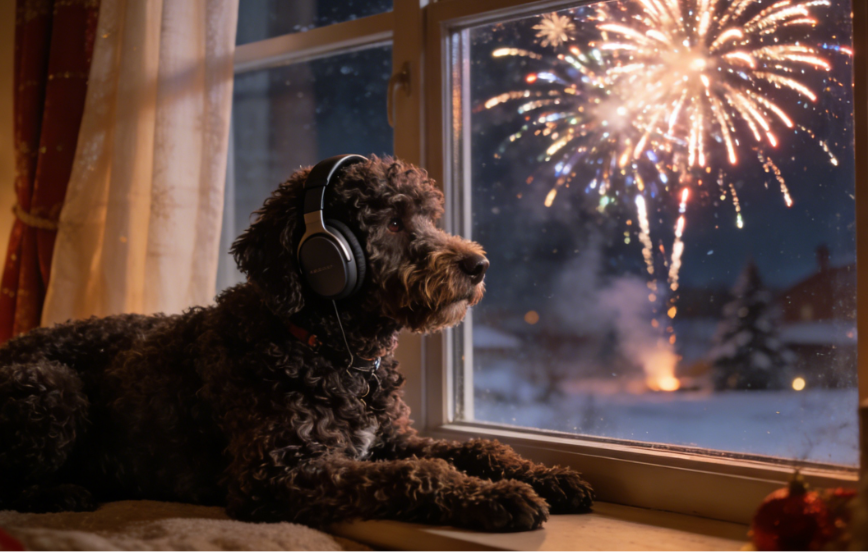
White noise or calming music can help “drown out” the sudden bangs of fireworks or loud party chatter. The goal is to create a consistent, low-level sound that makes unpredictable noises less noticeable.
- White noise machines: A fan, humidifier, or dedicated white noise machine works great. Point it toward the safe haven to maximize effect.
- Pet-specific music: Apps like “Through a Dog’s Ear” or “My Cat’s Music” have music designed to lower pet anxiety—studies show these tunes reduce stress hormones in dogs and cats.
- TV or radio: Leave a calm TV show (like nature documentaries) or soft radio station on at a low volume. Avoid loud commercials or fast-paced programs.
4. Try Calming Aids (Vet-Recommended Options)
For pets with mild to moderate anxiety, natural calming aids can provide extra support. Always check with your vet before using any product, especially if your pet is on medication.
Natural & Over-the-Counter Aids
- Pheromone products: Adaptil (for dogs) and Feliway (for cats) mimic the natural pheromones mother animals release to calm their young. They come as diffusers, collars, or sprays—plug the diffuser in the safe haven 24 hours before the event for best results.
- Calming treats: Look for treats with ingredients like L-theanine, chamomile, or CBD (hemp-derived, THC-free). Give them 30–60 minutes before the noise starts—they take time to kick in.
- Weighted blankets for pets: A light weighted blanket (2–5% of your pet’s body weight) can have a soothing, swaddling effect—great for dogs who like to be cuddled.
Prescription Options (For Severe Anxiety)
If your pet has extreme reactions (e.g., panicking, trying to escape, refusing to eat for days), talk to your vet about prescription medication:
- Anti-anxiety meds (e.g., alprazolam, trazodone) can be given short-term for holiday events.
- Sileo (a gel for dogs) is specifically designed to calm noise-induced anxiety—administered under the tongue 30 minutes before the noise starts.
5. Stay Calm & Avoid Reinforcing Stress
Your pet picks up on your emotions—if you’re anxious or stressed about their reaction, they’ll feel more scared too. Here’s how to act around them during noisy events:
- Stay relaxed: Speak in a soft, calm voice. Avoid rushing around or raising your voice—this signals danger to your pet.
- Don’t coddle excessively: It’s okay to comfort your pet with a gentle pat, but overly fussing (e.g., picking them up every time they tremble) can reinforce the idea that “noise = something to be scared of.” Instead, act normal—offer a treat or play a quiet game if they come to you.
- Avoid punishment: Never yell at or scold your pet for being scared. Punishment will only make their anxiety worse.
Holiday-Specific Tips for Fireworks & Parties
Tailor your prep to the specific holiday event to maximize calm:
For Fireworks (Christmas Eve, New Year’s Eve)
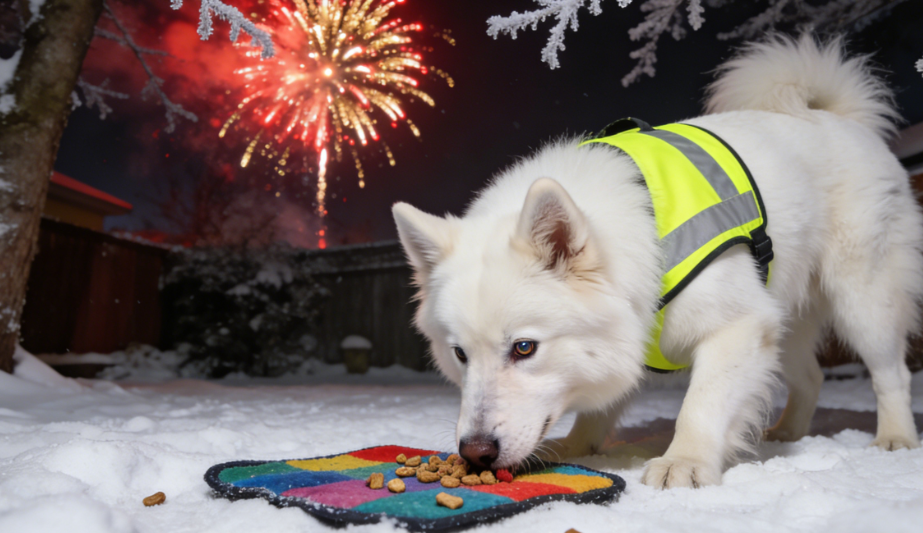
- Bring your pet inside early—don’t wait for the first firework to start. Keep them indoors for the entire duration of the display (and 30 minutes after, in case of stragglers).
- Close all windows, doors, and curtains to block out light flashes (flashes paired with noise make anxiety worse).
- Take your dog for a long walk before dark—tiring them out helps them relax during the noise.
For Holiday Parties
- Keep your pet in their safe haven during the party—guests, loud music, and unfamiliar scents can overwhelm them.
- Ask guests not to disturb your pet—put a sign on the door of the safe zone (e.g., “Quiet Please! Pet Resting Here”).
- Avoid giving your pet party food—rich or toxic foods (chocolate, grapes, alcohol) can cause stomach issues and add to their stress.
What to Do If Your Pet Is Already Panicking
If you didn’t have time to prep and your pet is in full panic mode, follow these steps:
- Guide them to their safe haven (don’t force them—let them choose to go).
- Turn on white noise or calming music immediately to mask the noise.
- Offer a high-value treat or a favorite toy to distract them.
- Sit quietly nearby—your presence will reassure them, but don’t crowd them. Let them come to you for comfort.
- If their panic doesn’t subside (e.g., they’re hyperventilating, collapsing), contact your vet or an emergency animal clinic right away—severe anxiety can be dangerous for their health.
Vet Warning: “Prolonged stress can lead to health issues like vomiting, diarrhea, or even heart problems in pets,” says Dr. Sarah Lopez, a veterinary behaviorist in Denver. “Don’t wait until your pet is in full panic to act—preparation is key to keeping them safe and healthy during the holidays.”
Final Thought: The Holidays Are for Everyone—Including Your Pet
The holidays are about togetherness, and that means making sure our furry family members feel safe and loved too. Leo still gets a little nervous during fireworks, but with his safe haven, calming treats, and soft music, he now curls up on his bed instead of hiding under mine. Mochi? She sleeps through the whole thing in her cardboard box, totally unbothered.
Remember, every pet is different—what works for Leo might not work for your cat or dog. Be patient, experiment with different strategies, and always prioritize their comfort over your holiday plans. A calm pet means a calm, happy holiday for everyone.
Your Turn: How do you calm your pet during holiday noise? Have you tried any of these strategies, or do you have a go-to trick that works? Share your stories in the comments below—I’d love to hear from you!