I used to stand in front of my budgie’s cage, repeating “Hello!” like a broken record—only for him to turn his back, fluff his feathers, and pretend I didn’t exist. I’d read all the “10-day budgie talking hacks” online, but nothing worked. After 2 weeks of feeling like a fool, I realized I was making a huge mistake: I was focusing on “teaching him to talk” instead of “letting him trust me first.”
Six weeks later, as I made coffee, I heard a tiny, squeaky “Hi!” from the living room. I dropped my mug (don’t worry, it didn’t break) and ran over—there was my budgie, Kiwi, tilting his head like he’d just said something totally normal.
This isn’t a “magic trick” guide. It’s the step-by-step, no-pressure way I bonded with Kiwi and got him to talk—no stress for him, no frustration for me. If you’ve ever felt like your budgie is ignoring you, or you’re scared of “pressuring” them, this is for you.
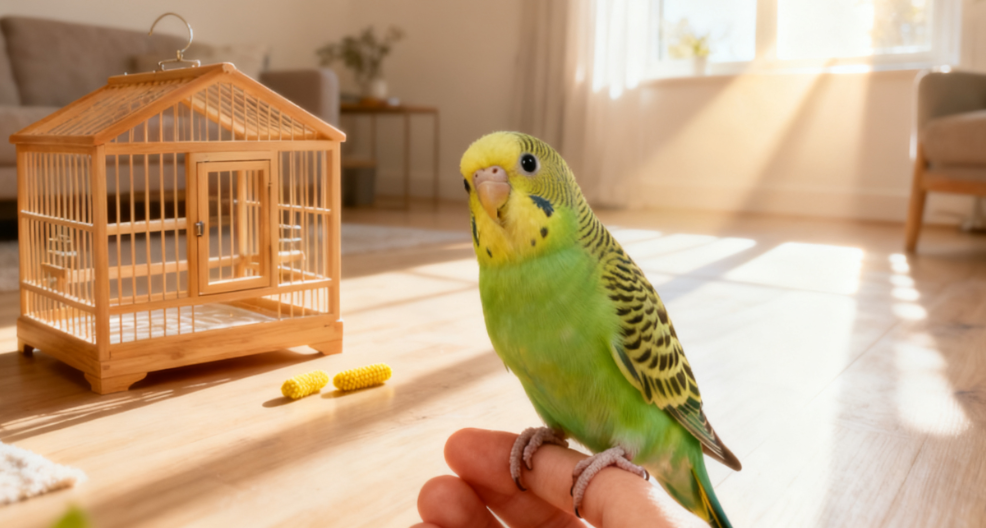
First: Why “Bonding First, Talking Later” Is Non-Negotiable
Before we get to the “how,” let’s clear one thing up: Budgies don’t talk to please you—they talk because they want to connect with you. If they don’t trust you, they won’t bother learning your “language.”
I learned this the hard way. In week 1, I tried shoving a treat in Kiwi’s face while yelling “Hello!” He started flinching every time I walked near his cage. That’s when I emailed a bird behaviorist, Sarah Miller, who set me straight:
🐦 Bird Expert Note: “Budgies are prey animals—loud voices, sudden movements, or forced interactions make them feel threatened. A budgie will only mimic sounds if they associate them with safety and comfort. Bonding isn’t a ‘step’—it’s the whole foundation.”

So I scrapped the “talking drills” and focused on one thing: making Kiwi feel like I was a friend, not a stranger.
My 6-Week Stress-Free Plan (Week-by-Week Breakdown)
This isn’t about “strict rules”—it’s about small, daily moments that build trust and teach talking. I spent 10–15 minutes a day on this (no more, no less—budgies have short attention spans!).
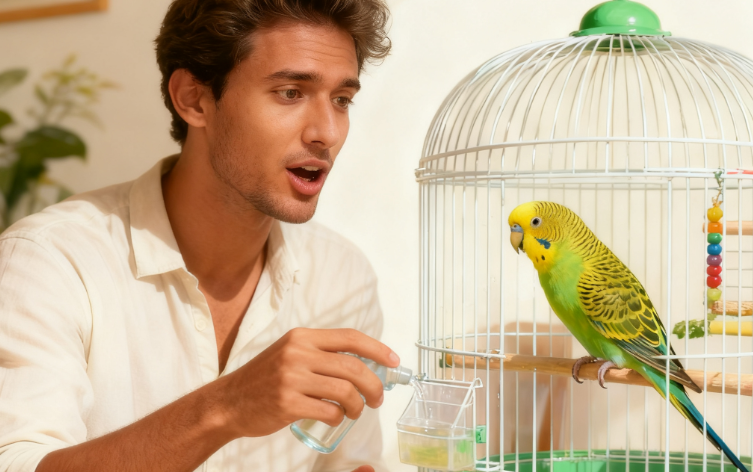
Week 1: “Be a Quiet Presence” (No Talking Drills!)
Goal: Get Kiwi used to my voice without asking anything of him.
What I did:
- Sat on the floor 1 foot away from his cage (not too close—no staring!) while I read a book. I talked to him softly, like I was chatting to a friend: “Kiwi, this book is boring. Wanna hear about my day?”
- Put a tiny piece of millet (his favorite treat) on the cage door without trying to feed him by hand. I just said, “Here’s a snack,” and walked away.
- Never opened the cage or reached inside—this week was all about “no pressure.”
Result: By day 5, Kiwi stopped flinching when I sat down. On day 7, he ate the millet while I was still in the room. Small win!
Week 2: “Sound Associations” (Teach Them to Link Words to Good Things)
Goal: Help Kiwi connect simple words to positive moments (no mimicking required yet!).
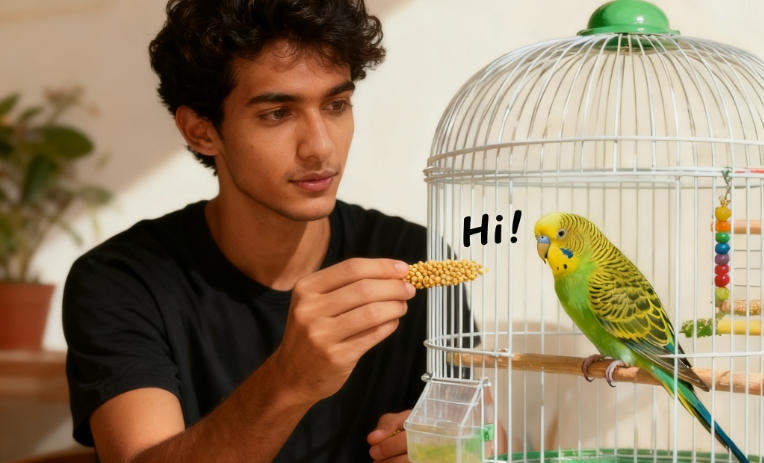
What I did:
- Every time I refilled his water bowl, I said “Water!” in a slow, gentle voice (no high-pitched baby talk—budgies respond better to calm tones).
- When I gave him millet, I said “Treat!”—one word, one time (no repeating 10x!).
- Played a 1-minute audio clip of a budgie saying “Hi!” while I sat with him (I found a calm one on YouTube—avoid loud, hyper clips).
Why this works: Budgies learn by association. If “Water!” always means “fresh water is here,” they’ll start to recognize the word as something good.
Result: Kiwi started perking up his ears when I said “Treat!”—he didn’t say it back, but he was listening.
Week 3: “Hand Trust” (Let Them Come to You)
Goal: Get Kiwi comfortable with my hands—this is key for bonding (and later, talking!).
What I did:
- Held a piece of millet in my open palm, 2 inches from the cage door. I didn’t move, didn’t talk—just waited.
- If he backed away, I pulled my hand back 1 inch and tried again the next day. No forcing, no sighing.
- When he finally hopped onto my finger (day 4 of this!), I said “Good boy!” softly and gave him the treat—no extra words, no rushing.
Pro Tip: Never grab your budgie’s wings or feet. Let them choose to step onto your hand—this builds confidence.
Result: Kiwi started hopping onto my finger every time I held out millet. He even let me stroke his head (gently!) once.
Week 4: “Single-Word Practice” (Short, Sweet, and Slow)
Goal: Start teaching one simple word—only because he trusts me now.
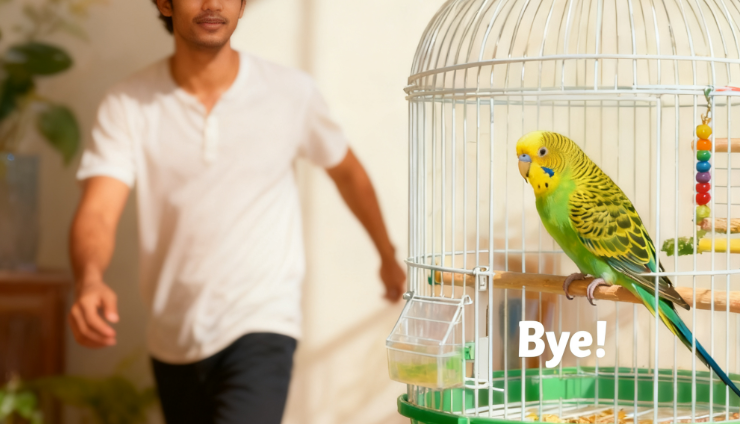
What I did:
- Picked one word: “Hi!” (short, 1 syllable—easy for budgies to mimic).
- Every time he hopped onto my finger, I said “Hi!” once, then gave him a tiny piece of millet.
- Did this 3–4 times a day, max. If he seemed bored (started preening his feathers mid-session), I stopped.
Avoid This: Don’t teach more than one word at a time. Budgies get confused if you switch between “Hi!” “Hello!” and “Goodbye!”
Result: Kiwi started making little “squeaky” sounds when I said “Hi!”—not quite the word, but he was trying.
Week 5: “Repeat, But Don’t Nag” (Keep It Fun)
Goal: Encourage his “squeaks” to turn into the word—without pressure.
What I did:
- When he made a squeak that sounded even a little like “Hi!,” I cheered softly (“Wow, that’s great!”) and gave him a treat. Positive reinforcement = key.
- Sat with him for 5 minutes a day, saying “Hi!” once every 30 seconds (no more—spacing it out keeps it interesting).
- Let him play with his toy bell in between—training shouldn’t feel like work.
Bird Expert Note: “Budgies learn best when they’re having fun. If training feels like a chore for you, it will feel like one for them too.”
Result: On day 6, Kiwi said a tiny “Hi!”—it was quiet, but I heard it. I cried (happy tears!).
Week 6: “Build on Success” (Add One More Word)
Goal: 巩固 “Hi!” and try one new simple word—“Bye!”
What I did:
- Said “Hi!” when he hopped onto my finger, “Bye!” when I put him back in his cage.
- Only gave treats when he mimicked either word—no pressure to do both.
- Let him “lead” the session: If he wanted to play instead of talk, we played.
Result: By the end of the week, Kiwi said “Hi!” every time I walked in the room, and “Bye!” when I left. He even started saying “Hi!” to my roommate—proof he wasn’t just repeating for treats.
❌ 5 Mistakes I Made (So You Don’t Have To)
These are the things that slowed me down in the beginning—learn from my errors!
- Yelling or repeating too much: Budgies think loud voices = danger. One word, one time is enough.
- Training when he was hungry/tired: Do sessions 1 hour after he eats, when he’s awake and playful (budgies are most active at dawn and dusk).
- Using complex words: “Hi!” “Bye!” “Treat!” are perfect—“What’s up?” is way too hard.
- Comparing him to other budgies: My friend’s budgie talked in 3 weeks—so what? Kiwi learned at his own pace, and that’s okay.
- Forgetting to play: Bonding isn’t just about training—we played with his bell for 10 minutes every day. That’s when he started trusting me the most.
Final Thought: It’s About Connection, Not Words
I used to want Kiwi to talk so I could show him off. Now? I’m happier about the way he flies to the cage door when I get home, or snuggles on my shoulder while I watch TV. The talking was just a bonus— the real win was bonding with him.
If you’re feeling frustrated, take a step back. Ask yourself: “Am I doing this for him, or for me?” When you focus on making your budgie feel safe, the words will come—slowly, but surely.
💬 Your Turn: Do you have a budgie (or parrot!) that talks? Or are you trying to teach them? Share your stories in the comments—I’d love to hear how it’s going!