

Last month, I caught myself staring at my dog, Luna, as she paced back and forth by the door while I packed for a weekend trip. I wondered: Is she anxious? Bored? Just excited about the possibility of a walk? For years, understanding our pets’ emotions felt like guesswork—relying on wagging tails, flattened ears, or the occasional meow to decode what they couldn’t say. But in 2026, that’s changing fast.
Across Europe and North America, “pet mental health” has moved from a niche topic to a mainstream priority—and technology is leading the charge. From AI-powered collars that track stress levels to apps that play calming audio tailored to your pet’s mood, a new wave of pet tech is bridging the communication gap between humans and our furry companions. And it’s not just a trend: The global pet health and wellness app market is projected to grow from $5.88 billion in 2023 to $25.09 billion by 2032, with a staggering 17.5% annual growth rate. Pet owners are no longer just feeding and housing their pets—we’re investing in tools to understand them.
In this post, we’ll break down why pet mental health is dominating conversations in Europe and North America in 2026, the game-changing tech making it easier to “read” your pet’s feelings, and how to use these tools (without over-reliance) to support your pet’s emotional well-being. Plus, we’ll share insights from veterinary behaviorists to keep your approach science-backed.
🐾 Why Pet Mental Health Is a Top 2026 Trend in Europe & North America
The surge in focus on pet mental health isn’t random—it’s driven by three key shifts in how we view and care for our pets:
1. The “Pet Humanization” Movement Has Gone Mainstream
Today, 85% of pet owners in the U.S. and Europe consider their pets “family members,” not just animals. This means we’re holding pet care to the same standard as human care—including emotional well-being. Just as we prioritize our own mental health, we’re now asking: Is my pet happy? Stressed? Lonely?
Social media has amplified this shift. On TikTok, the #DogAnxiety hashtag has over 5 billion views, with 72% of videos showing owners tearfully worrying about their pet’s loneliness. These posts aren’t just viral—they’re sparking conversations about how to better support our pets’ emotional needs.
2. Pet Anxiety Is More Common Than We Think
Veterinary behaviorists report that up to 30% of dogs and 20% of cats suffer from chronic anxiety—whether from separation, loud noises, or changes in routine. And with more people working from home (then returning to offices) or traveling post-pandemic, these stressors are on the rise. Pet insurance data backs this up: Behavior disease claims jumped from 7% in 2020 to 23% in 2024, as owners seek professional help for their pets’ anxiety.
3. Tech Makes Emotional Care Accessible
In the past, assessing pet anxiety required expensive vet visits or behavioral consultations. Today, affordable tech tools put “emotion tracking” in the hands of everyday pet owners. This accessibility has made pet mental health a tangible, actionable topic—no advanced degree required.
🔬 The 2026 Pet Tech Revolution: Tools That “Speak” Pet
The latest pet tech doesn’t just track activity—it decodes emotions. Below are the most popular (and vet-approved) tools taking Europe and North America by storm, plus how they work:
- How they work: Collars like Whistle Health or Invoxia’s Minitails Biotracker monitor heart rate, breathing patterns, and even “stress behaviors” (e.g., excessive licking, pacing). The app alerts you when your pet’s stress levels spike and provides a history of trends (e.g., “Luna gets stressed every time I leave the house”).
1. Stress-Monitoring Collars
Gone are the days of basic GPS trackers. Today’s smart collars use AI and biometric sensors to detect stress signals in real time.
- How they work: Collars like Whistle Health or Invoxia’s Minitails Biotracker monitor heart rate, breathing patterns, and even “stress behaviors” (e.g., excessive licking, pacing). The app alerts you when your pet’s stress levels spike and provides a history of trends (e.g., “Luna gets stressed every time I leave the house”).
- Why they’re popular: They turn subjective observations (“Luna seems anxious”) into objective data (“Luna’s heart rate doubles when I grab my keys”). This helps owners and vets tailor interventions.
2. AI-Powered Calming Apps
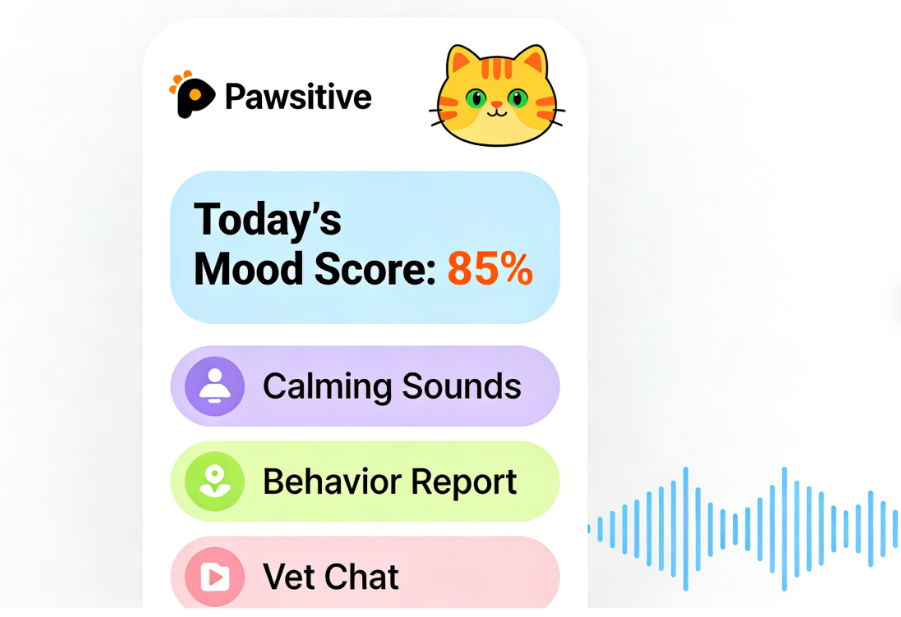
Apps like Pawsitive (endorsed by the American College of Veterinary Behaviorists) use clinically proven audio-visual algorithms to reduce anxiety.
- How they work: These apps play 432Hz “harmony frequencies” (tested by Cambridge University to lower canine cortisol levels by 19%) or interactive games to distract stressed pets. Some even adapt to your pet’s response—if pacing doesn’t decrease, the app switches to a different sound or activity.
- Why they’re popular: They’re affordable ($19.99/month on average) and easy to use—just pull up the app on your phone and press play. Many pet insurance companies now include these apps in their wellness packages.
3. Behavior-Tracking Cameras
Advanced pet cameras like Furbo 360 now use AI to analyze behavior, not just show live feeds.
- How they work: The camera detects actions like excessive barking, hiding, or destructive chewing and sends you alerts. It also creates a “behavior report” (e.g., “Max hides under the couch 3 times a day when you’re at work”). Some even let you speak to your pet or dispense treats remotely to calm them.
- Why they’re popular: They solve the “out of sight, out of mind” problem. Owners can see exactly how their pets behave when alone, making it easier to spot anxiety early.
4. Calming Supplements + Tech Pairings
Nutrition is joining the tech revolution, with supplements designed to work alongside digital tools.
- How they work: Brands like Zesty Paws and YuMOVE offer calming bites with L-theanine or fish protein hydrolysates (proven to reduce stress). Many apps now let you log supplement use and track how it impacts your pet’s stress levels over time.
- Why they’re popular: They combine “digital monitoring” with “physical support,” creating a holistic approach to anxiety.
Vet Insight: “Tech tools are great for detection, but they’re not a replacement for human interaction,” says Dr. Elena Marquez, a European veterinary behaviorist. “Use them to identify stress triggers, then pair the data with quality time, training, or professional help if needed.”
🛡️ How to Use Pet Tech Responsibly (Avoid the “Over-Reliance” Trap)
While pet tech is powerful, it’s easy to fall into the trap of letting apps replace real connection. Here’s how to use these tools responsibly, based on expert advice:
1. Let Data Guide, Not Dictate
If your stress collar shows your pet gets anxious when you travel, use that data to make changes (e.g., leave a piece of your clothing, try a calming app) — don’t just stare at the numbers. Tech should be a tool to improve your bond, not a substitute for it.
2. Don’t Ignore “Low-Tech” Solutions
Even the best app can’t replace a long walk, interactive play, or a quiet cuddle session. Studies show that mental stimulation (like puzzle feeders or fetch) reduces anxiety just as effectively as tech tools — and strengthens your relationship in the process.
3. Know When to Call a Pro
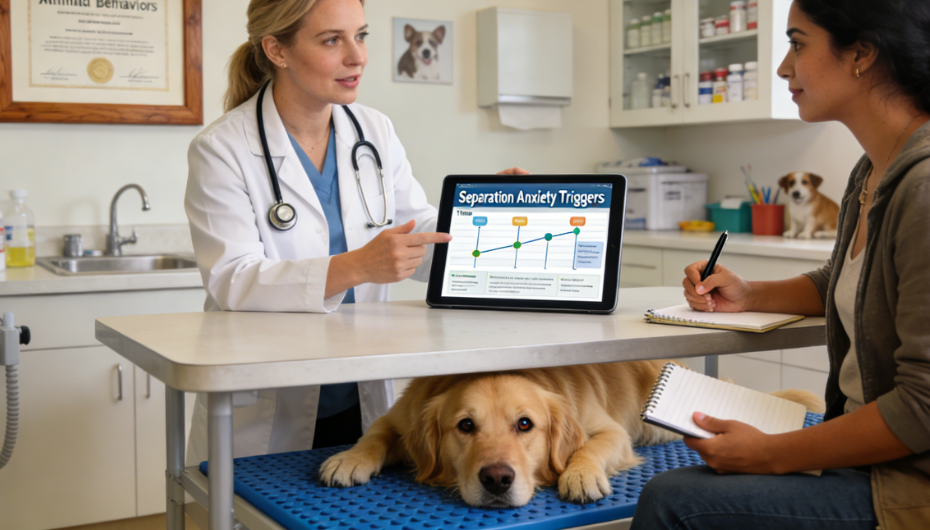
If your pet’s stress levels are consistently high (e.g., pacing all day, refusing food, aggressive behavior), tech data can help your vet make a diagnosis — but it’s not a replacement for professional care. Always consult a veterinary behaviorist for chronic anxiety.
4. Respect the “Ethical Boundary”
Experts warn against using tech to “mask” stress instead of addressing the root cause. For example, if your pet is anxious because they’re left alone for 10 hours a day, a calming app might help temporarily — but the real solution is adjusting your schedule or hiring a pet sitter. Tech should never be an excuse to ignore your pet’s basic needs.
🌟 The Future of Pet Care: Listening, Not Just Tracking
The 2026 pet mental health trend isn’t just about gadgets — it’s about a fundamental shift in how we relate to our pets. We’re moving from “controlling” their behavior to “understanding” their emotions, and tech is helping us do that.
For me, Luna’s stress collar was a wake-up call. The data showed she got anxious every time I left the house — so I started leaving her with a puzzle feeder, playing calming music, and taking longer walks before I went out. Now, her stress levels are down, and our bond is stronger than ever. The collar didn’t “fix” her anxiety on its own — but it helped me listen to what she couldn’t say.
As we embrace this new era of pet care, let’s remember: The best tech in the world can’t replace the power of presence. But when used wisely, it can help us be better, more empathetic pet parents — and that’s something every furry friend deserves.
Your Turn: Have you tried any pet mental health tech? How do you check in on your pet’s emotional well-being? Share your thoughts in the comments below — I’d love to hear from you!